What Is Hotel Booking Engine Software? Direct Sales Guide
Understanding what is hotel booking engine software changes how independent properties capture revenue without giving away twenty percent of every room night to third-party portals. Last spring in Kyoto, I spoke with a boutique inn owner who cut his annual commission expenses by forty thousand dollars simply by upgrading his website checkout flow. Before that switch, frustrated mobile visitors abandoned his slow contact form and booked his exact rooms through major travel aggregators instead. Let us examine how direct reservation tools operate, why owning your guest data matters, and what features drive completed bookings.
What Is a Hotel Booking Engine, Explained Clearly

A direct reservation widget works like an online cash register embedded right inside your property website. Travelers select their arrival dates, inspect live room photos, and pay securely with a credit card at any hour of the day. Research published by Cornell University School of Hotel Administration indicates that properties optimizing their direct website conversion paths retain significantly higher net operating income per available room. Knowing how this software functions helps hoteliers turn passive website browsers into confirmed, paying guests.
How it lets guests reserve rooms on your website
When a visitor clicks your book now button, the interface displays real-time inventory, seasonal rates, and clear cancellation terms immediately. Payment gateways process deposits automatically while sending instant confirmation vouchers to the traveler’s inbox. Eliminating phone tag and manual email quotes prevents impatient buyers from clicking away to competitor sites.
How it differs from OTAs and your PMS
Online travel agencies like Expedia act as public marketplaces that charge steep commission fees for every reservation they send your way. A property management system handles internal daily tasks such as housekeeping schedules, guest check-ins, and room billing. Your booking engine bridges that gap by capturing commission-free sales directly on your own domain.
Why Direct Bookings Through an Engine Pay Off
Relying exclusively on third-party travel sites leaves your business vulnerable to sudden algorithm shifts and rising commission structures. Building an independent sales channel gives you complete pricing control and stronger profit margins throughout the year. Smart operators treat external portals as billboard advertising while using their own site to close repeat business.
Avoiding OTA commission fees
Third-party distribution channels routinely collect fifteen to twenty-five percent of your gross room revenue on every completed stay. Capturing those exact same reservations through your own website keeps that money inside your operational budget. Even shifting thirty percent of your annual occupancy toward direct bookings funds major property upgrades or staff bonuses.
Keeping guest data and relationships in-house
Online travel agencies frequently mask customer email addresses behind temporary proxy aliases, blocking you from building direct marketing lists. Direct website reservations capture real guest contact details, stay preferences, and birthday dates inside your own database. Owning this information lets you send personalized return discounts that fill rooms during quiet shoulder seasons.
Features That Make a Booking Engine Effective
Selecting a modern reservation tool requires looking beyond basic calendar displays to evaluate mobile speed and upsell capabilities. Clunky multi-page forms frustrate smartphone users who expect two-tap checkout convenience. Property managers must prioritize clean visual layouts that load fast and build buyer trust instantly.
Mobile-friendly checkout and real-time availability
Over sixty percent of last-minute hotel searches now happen on mobile phones while travelers sit in airport lounges or trains. Responsive checkout screens adapt automatically to small displays, featuring large buttons and digital wallet payment options like Apple Pay. Instant inventory synchronization guarantees guests never book a room that just sold out seconds earlier.
Upsells and package options at booking
Smart reservation engines let you offer profitable add-ons like late checkout, airport transfers, or champagne packages right before payment. Guests happily spend extra money on convenience perks when presented cleanly during the checkout process. Hospitality entrepreneurs launching new properties often pair strong checkout flows with memorable branding, such as exploring catchy boutique hotel name ideas and unique boutique hotel concept ideas that stand out online.
How to Add a Booking Engine to Your Hotel Site
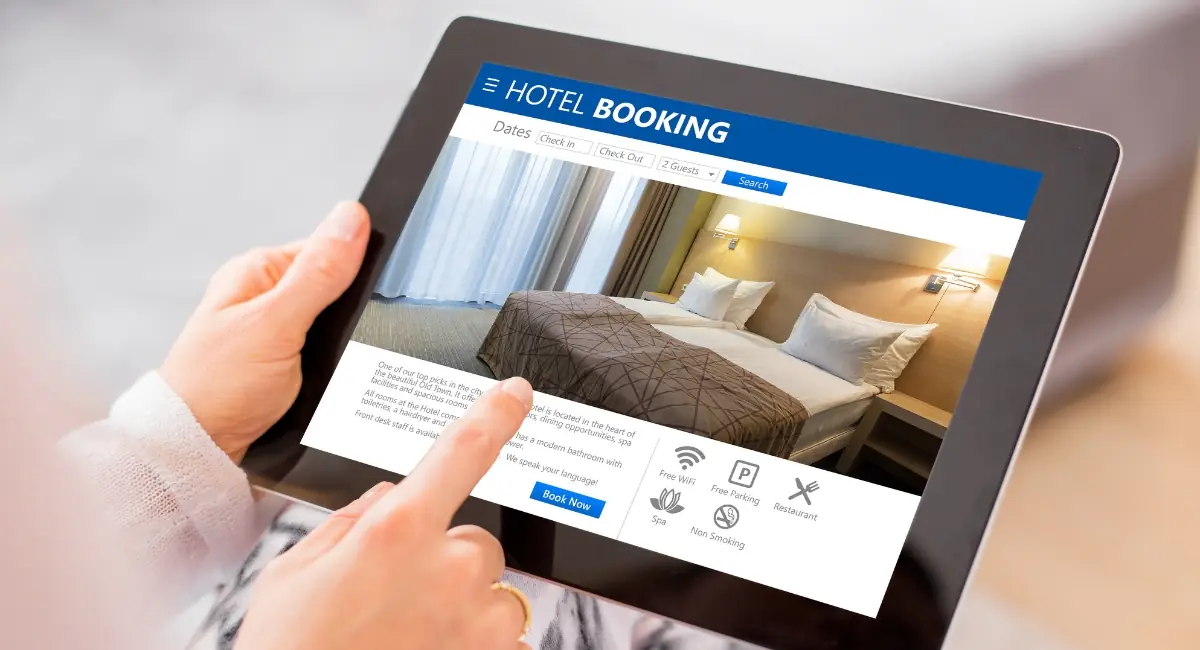
Integrating reservation software into an existing website rarely requires rebuilding your entire digital presence from scratch. Most modern cloud providers supply lightweight code snippets or simple plugins that match your brand colors and typography. Careful testing before launch ensures every button, rate tier, and confirmation email works smoothly.
Connecting it to your existing systems
Two-way integration links your website checkout directly with your channel manager and front desk property management software. Room counts are updated automatically across every connected sales portal whenever a guest completes a direct purchase. Designing cohesive guest experiences also extends to physical spaces, where studying inspiring boutique hotel bathroom ideas helps ensure your actual rooms deliver on your website’s visual promise.
Measuring performance after launch
Tracking conversion rates, abandoned cart metrics, and revenue per visitor reveals how well your checkout page performs over time. Managers use analytics data to spot where shoppers drop off, such as confusing tax disclosures or complicated password requirements. Adjusting promo codes and room descriptions based on real numbers steadily lifts your direct booking share.
-
Display a clear best rate guarantee badge next to your booking button to discourage price shopping.
-
Keep checkout forms short by asking only for essential guest details needed to confirm the stay.
-
Offer flexible cancellation tiers alongside non-refundable discount rates to capture different buyer mindsets.
-
Test the entire reservation flow on both iOS and Android devices every quarter to catch display bugs.
Frequently Asked Questions
What is hotel booking engine software used for?
A hotel booking engine is an online tool embedded on a property website that allows guests to check live room availability, select dates, and pay securely. It enables hotels to capture direct, commission-free reservations twenty-four hours a day.
Do small hotels really need a dedicated booking engine?
Yes, independent inns and boutique hotels benefit hugely from direct booking engines because avoiding fifteen to twenty percent OTA commissions dramatically improves profit margins. Modern cloud tools are affordable and easy to install without technical staff.
How does a booking engine prevent double bookings?
Quality booking engines connect directly to your property management system and channel manager via two-way synchronization. Whenever a room sells on your website or an external travel site, inventory updates across all platforms within seconds.
Are booking engine transaction fees expensive?
Most providers charge either a flat monthly subscription starting around fifty dollars or a small transaction fee between one and three percent per direct booking. Both options cost significantly less than standard online travel agency commissions.
Conclusion
Understanding what is hotel booking engine technology empowers property owners to take control of their sales channels and keep more hard-earned revenue. By offering fast mobile checkout, attractive package upsells, and seamless inventory syncing, you turn your website into your most profitable salesperson. Evaluate your current website conversion flow today, request live demos from trusted hospitality software providers, and start capturing more direct bookings.